Day 48: Lochinver to Lewis

‘The most terrible creature on this planet? It’s the human. We destroy everything… closely followed by the midge, and the tick!’ – Greg, Lochinver.

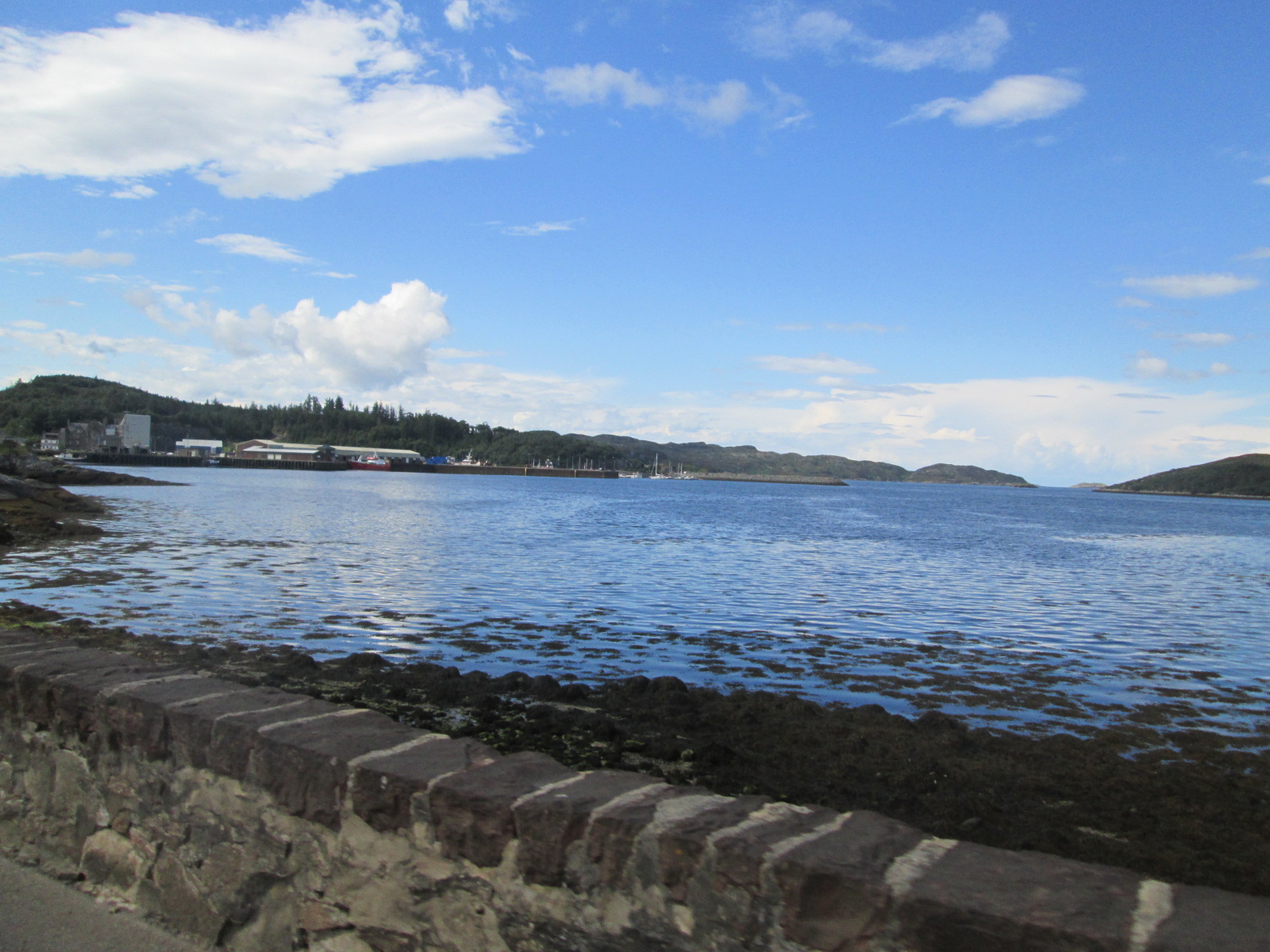
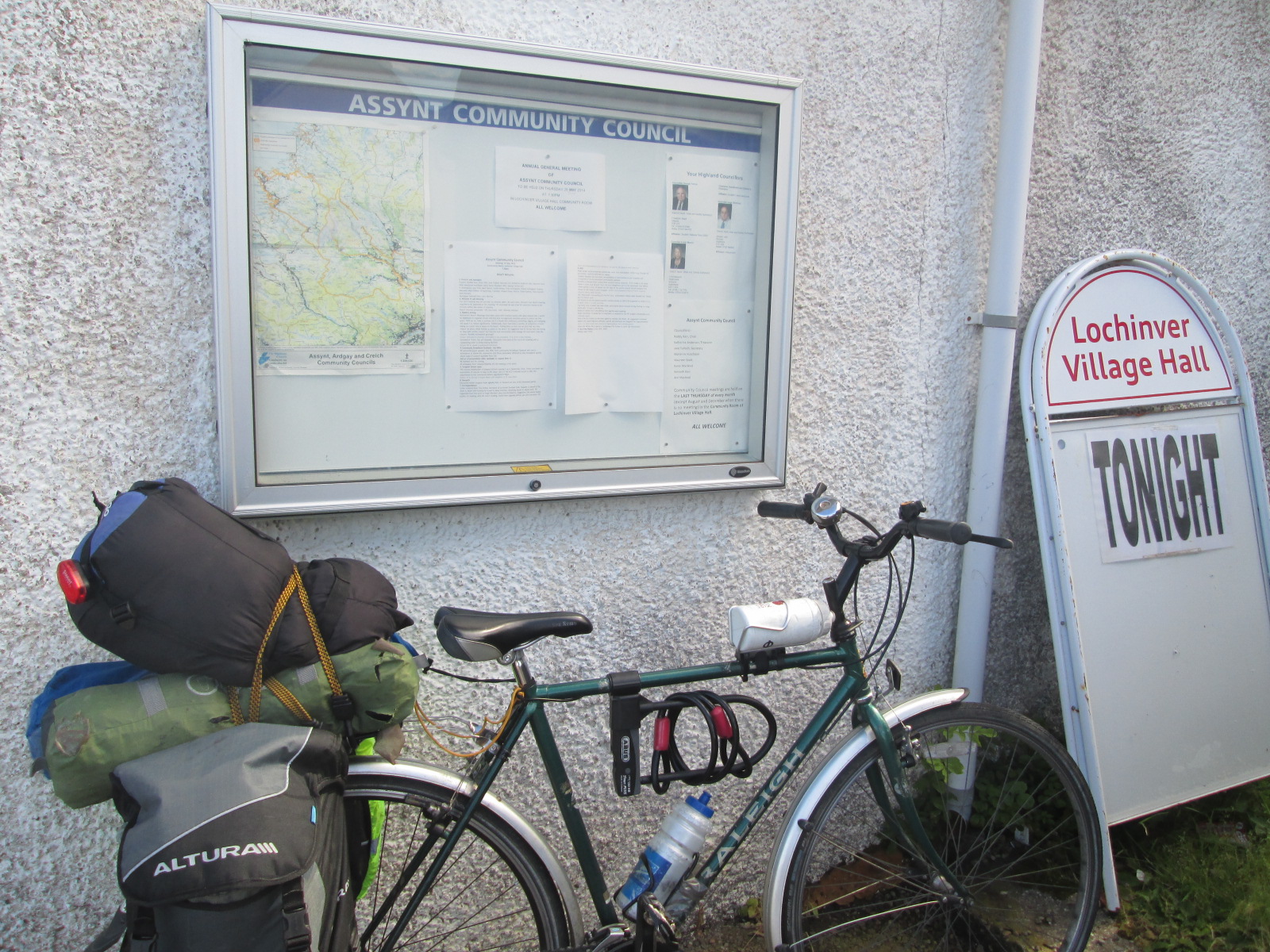
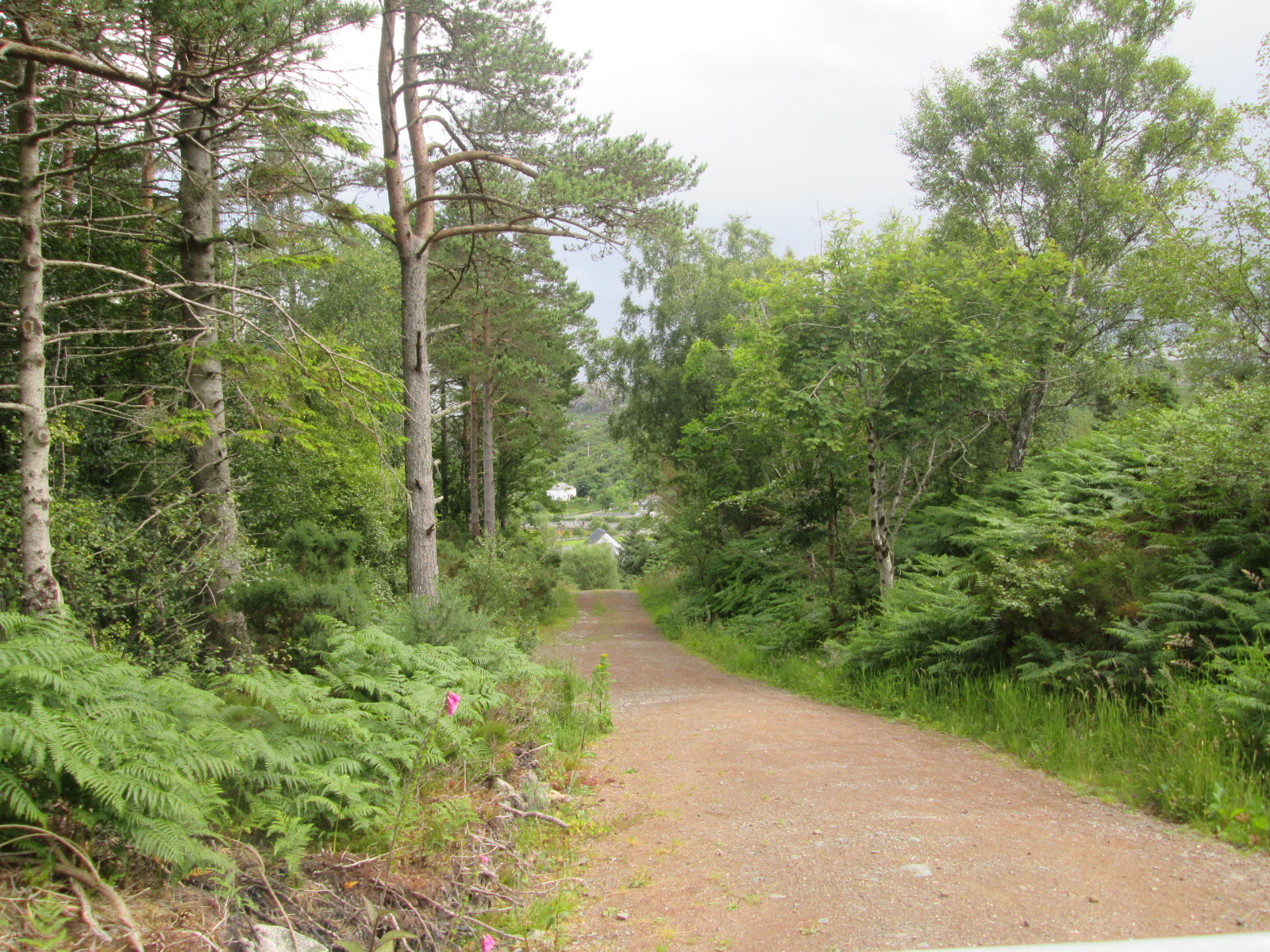
I awake with a fierce hangover on a shrubby hillock in the heart of Culag woods, a small but dense forest overlooking the fishing village of Lochinver. The beer, whisky and good times made sleeping easy, but the surface around me is uneven and boggy. Some strange little insect has lodged itself in my arm and with some difficulty I manage to squeeze it out. I’ll quickly become accustomed to these nasty critters. My socks and much of the tent are soaked through, and a pair of damp and whiffy socks are unhappily thrown away as tribute to the rain gods.

It’s a Sunday morning and the overnight rain seems to have cleared. Being dependent on tourism and fishermen, Lochinver actually has a shop and tourist office open, with a little museum at the back. There’s nothing about the wretched people of Assynt that Pennant saw, but the collection completes the pieces of a familiar puzzle. After Culloden, the local MacLeod chiefs had their obligations to their clans removed. Like other highlanders, they took well to making money from their lands, and gradually adopted a London-based lifestyle of the rich, spending the income of their estates in coffee houses and card tables. Debts lost them the land to the enterprising Duke of Sutherland. Over the early 19th century local farmers were burnt out and cleared to make room for sheep farming. Economic profit continued to trump traditions and human lives.

Lochinver was built in 1812 as a fishing port for these evicted farmers, and over the following nine years the surrounding area – that Jurassic wilderness I passed through yesterday – saw burnings and evictions. There were riots in nearby Inchnadamph against the collusion of the local church with the lairds, but most people were forced by starvation to move to Canada, Australia and elsewhere. By the 1870s the price of wool collapsed, and greedy lairds faced financial ruin, until Queen Victoria turned the Highlands and hunting into an English aristocratic retreat. Whilst the rich came to holiday, those locals who managed to eke out a living through croft-farming or fishing struggled to survive. It was a bleak place. Some organised deer raids against the rich, driving away toffs and their game to preserve ‘the land of Assynt to the people of Assynt.’
Day 48 001 Day 48 002 Day 48 008 Day 48 009 Day 48 010 Day 48 011

Continue reading

Day 45: Carness Bay to Thurso

‘It’s extraordinary.’
‘It’s brilliant!’ – Aiden’s reply, on the life and death practices of the Neolithic people of Orkney.

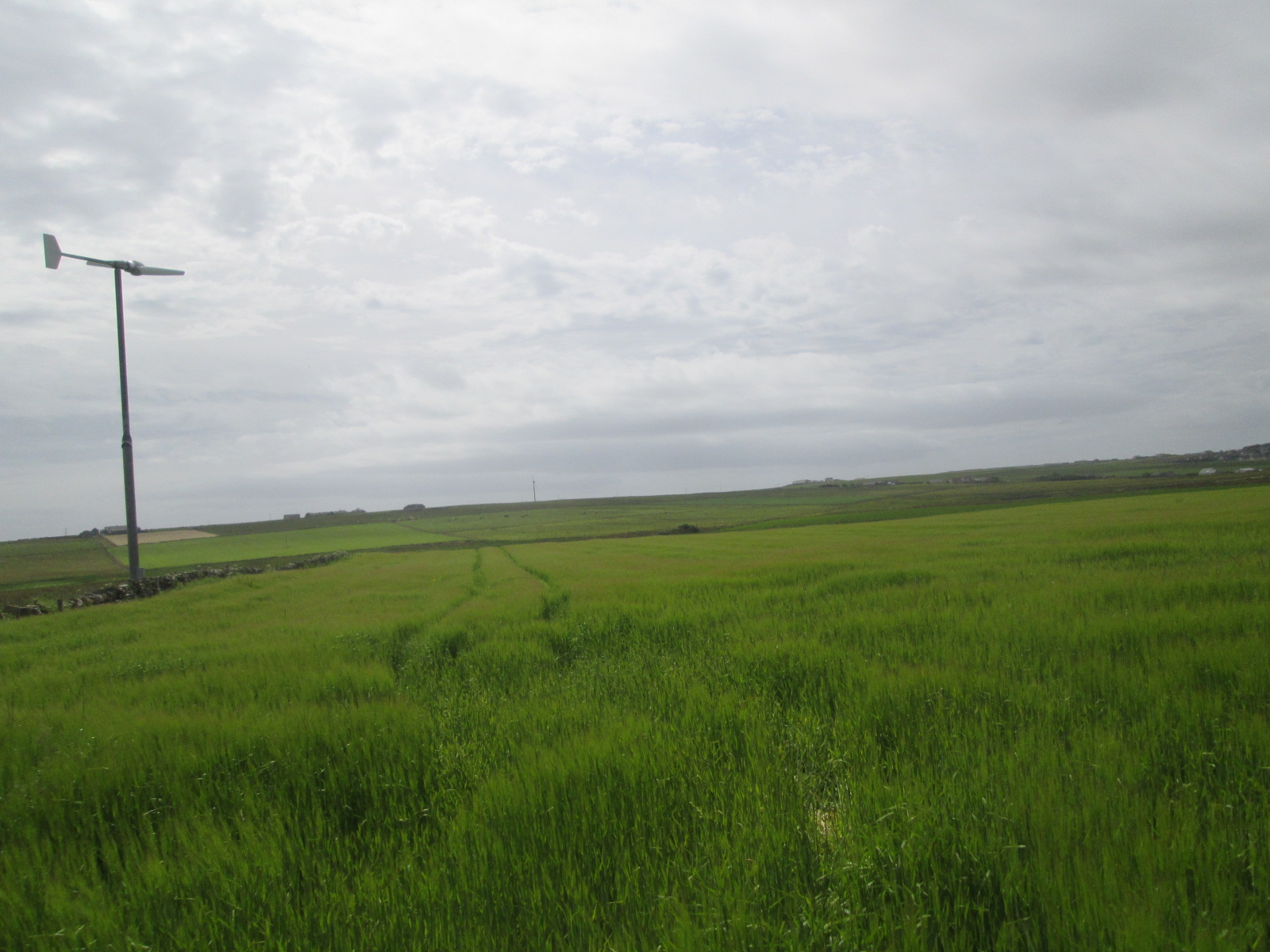
A couple of days back, I found out that wind farms were a visual pest on Orkney. Having spent the night sleeping under one, I can say that they’re not so bad, sonically speaking. The night’s howling wind sent the turbine propeller into warp speed ten, but its gentle hypnotic patter and the tent’s protection from the rain combined into a cosy cocoon.

In the morning light, my tent and I find ourselves ridiculously exposed to the string of houses near opposite. I pack up furtively, and cycle back to Kirkwall for a second examination. At night, the harbour town was deserted and intriguing. By day, it is bustling with tourists, locals, and people plying some kind of trade towards each. Along its semi-pedestrianised narrow main lane, I pass puppeteers and horse-drawn carriages by the tourist cafes, mega dealz discount shops and gift stores. The bait? Laid out nearby are the grand St. Magnus Cathedral and the ruins of the nearby Bishop’s and Earl’s Palaces. Around nine tenths of the current population of Orkney seem to be around these two proximate sites, documenting any kind of visual feature with the kinds of cameras that a decade back paparazzi would have sold their mother’s kidney for.

Day 45 024 Day 45 025 Day 45 026 Day 45 027 Day 45 028 Day 45 029

Continue reading

Day 44: Shetland

‘Aye, there’s people in the country. But I’ve never been there’. – George, Lerwick.

I’ve gone off the map…

There’s been a gradual imperceptible transition from what felt like normality – retail parks, major supermarkets, traffic lights, dual carriageways, petrol stations, Greggs’ the bakers, mass unemployment and a depressing concentration of abysmal overpriced housing – into a smoother stream of forests, fields of heather, and great gliding spaces of well … nothing I’ve ever been prepared for.

The name of this beautiful wildflower scattered across these fields where red deer cross, untroubled by cars? The origins of these great rising bens, touching the skies like the vertebrae of fallen giants? Or the geological explanation for these eye-boggling gorges and glens that tear through the terrain like a hyperactive seismograph?

To a person familiar only with the largest of cities, all this is disturbing me, seizing me up, shaking my imagination, a violent ventriloquism. At times it’s too bleak to be pleasant, but the mind is twisted and transformed by it. Beauty becomes a kind of normality.

Day 44 001 Day 44 002 Day 44 003 Day 44 004 Day 44 005 Day 44 006

Continue reading

Day 43: Orkney to Shetland

‘The technical word for this is fucked’ – Steve, Orkney.

There’s little evidence for the passage of time in Orkney. It’s a place to come and disappear. Anyone thinking of faking their own deaths for whatever purpose, take note. There’s no need to travel to Panama like John Darwin of Seaton Carew, or disappear in some Mexican river like Arthur Cravan.

Even Elvis Presley could conceivably have arrived here without raising an eyebrow. I can picture The King dawdling across St. Margaret’s Hope harbour and into a taxi run by a farmer whose crops are out of season. It being a solitary occupation, the farmer, let’s call him Gerard, doesn’t even look up to inspect his rear passenger. Later, responding to an ad in a local rag, Elvis sports an oversized waterproof coat and trapper hat, and traded a few gold records for a third-hand fishing boat with some local. He lived out the remainder of his days just off the coast of North Ronaldsay, failing to ever work out how to fish trout.

Day 43 001 Day 43 002 Day 43 003 Day 43 004

Continue reading

Day 42: Auckengill to Orkney

‘And on the eighth day, God opened his bowels and out came…’ – Russell, Orkney, on home.

A weird young man greets me on the road leaving Auckengill where I slept the previous night. In the midnight confusion, what seemed like the disused remains of a former country lane turned out to be a road drainage ditch. Once nestled inside my tent, I could hear and feel great piles of discarded plastic bottles and car debris crumpling under the thick grass. The cool morning and unfamiliar landscape is already disorientating.

He has a large rock tied to the back of his bike, and dons an old farmer’s tweed blazer and a pair of dirty jeans, several sizes too large. At first I can’t understand him. Accents have changed since Wick, gas a more lilting and Irish twang, a kind of Hollywood attempt at rural Irishness. That’s not to make light of this distinct north eastern Highlands lilt. Kevin asked me where I’d heard the best spoken English. ‘I’m not sure, everywhere I hear good and bad’, I’d told him. I don’t think there is a good model. He disagrees, and says that it’s in the Highlands. ‘Here people speak most clearly. We’re the easiest to understand, it’s our articulation’.

Day 42 001 Day 42 002 Day 42 003 Day 42 005 Day 42 006 Day 42 007

Continue reading